Not every probiotic strain is studied equally — and almost none of the strains marketed for “oral health” were actually isolated from the mouth. This is the single most important thing to understand about the category, and it’s the thing most consumer-facing content gets wrong.
This guide sets out which oral probiotic strains have the strongest clinical research for gum health, cavity risk reduction, and bad breath control — and gives you a clear set of criteria for evaluating evidence claims in any strain you encounter.
A gut probiotic — typically a Lactobacillus or Bifidobacterium species — is selected to survive stomach acid, reach the intestine, and exert effects there. The mechanisms, target microbiome, and clinical endpoints all sit below the diaphragm.
An oral probiotic is a fundamentally different proposition. It is selected to colonise the oral cavity — teeth, gums, tongue, throat — and to interact with the oral microbiome at the site of action. The most rigorously studied oral probiotics are native oral commensals: bacteria that were originally isolated from healthy human mouths, not adapted from gut species.
This distinction matters because the evidence does not transfer. A Lactobacillus rhamnosus trial showing benefit for IBS tells you nothing about gum health. A strain’s clinical data is specific to the strain, the site, and the endpoint — and oral probiotic strains earn their evidence on dental, periodontal, and ENT outcomes specifically.
Before evaluating any strain, formulators and brand teams should be able to answer five questions about the underlying research:
A strain that meets all five criteria for a specific indication is meaningfully different from a strain that has been “shown to” do something in an in-vitro study. Most marketing copy collapses this distinction. The evidence does not.
The two most-studied native oral probiotic strains, by published trial volume and breadth of indication, are Streptococcus salivarius K12 (BLIS K12™) and Streptococcus salivarius M18 (BLIS M18™). Both were originally isolated from the oral cavities of healthy humans, both produce natural antimicrobial peptides (lantibiotics) that selectively inhibit pathogenic bacteria, and both have been evaluated across paediatric, adolescent, and adult populations.
The two strains are not interchangeable. Their evidence bases support different indications.
| Indication | Strain with strongest evidence | Best-studied populations |
|---|---|---|
| Cavity (caries) risk reduction | BLIS M18™ | Children, adolescents, orthodontic |
| Gum health / periodontal markers | BLIS M18™ | Young adults, periodontitis patients |
| Plaque accumulation | BLIS M18™ | Children, young adults |
| Bad breath (halitosis / VSC reduction) | BLIS K12™ | Adults; also adjunct for orthodontic populations (BLIS M18™) |
| Throat & ENT health | BLIS K12™ | Children, adults |
| Upper respiratory tract immunity | BLIS K12™ | Children, healthcare workers |
Gum health — measured clinically through gingival index, gingival bleeding index, plaque index, bleeding on probing (BOP), and probing pocket depth — is the indication where BLIS M18™ has the deepest body of evidence in adults.
Babina et al. (2024) ran a three-month randomised clinical trial in 61 young adults. The BLIS M18™ group showed significant reductions in gingival bleeding index and plaque accumulation compared to control. Results were sustained at follow-up.
Chen et al. (2025) conducted a 36-week randomised, placebo-controlled study in adults with periodontitis. BLIS M18™ as an adjunct produced significant improvements in plaque index, bleeding on probing, and probing pocket depth — and the effect was sustained beyond the active intervention period, which is unusual in periodontal interventions and clinically meaningful.
Kiselnikova & Toma (2022) ran a 12-month controlled study in preschoolers with caries. Two 3-month courses of BLIS M18™ were associated with a 73% reduction in gingivitis (PMA index) versus control.
The mechanism is consistent across these trials: BLIS M18™ produces antimicrobial peptides active against periodontal pathogens, contributes enzymatic activity against dental biofilm, and helps regulate salivary pH.
Dental caries is driven by acid-producing bacteria — primarily Streptococcus mutans — which feed on dietary sugars and erode enamel. An oral probiotic that addresses caries risk needs to demonstrate effects on either S. mutans counts, plaque accumulation, or measurable caries indices.
BLIS M18™ has been evaluated against all three.
Kiselnikova & Toma (2022) reported an 81% reduction in dental caries (ICDAS index) and a 2.3× improvement in caries stabilisation in preschoolers given two 3-month courses over 12 months.
Di Pierro et al. (2015) ran a 90-day randomised study in children at high caries risk (n=76). Children completing the BLIS M18™ course had a 70% chance of avoiding new caries, compared to 37% in the untreated control. Cariogram outcomes were significantly improved, with over 90% treatment tolerability.
Burton et al. (2013) — a dentist-led, double-blind, placebo-controlled trial in children aged 5–10 — reported significantly reduced dental plaque after three months, alongside protection against cariogenic bacteria and acid erosion.
Salim et al. (2023) found that children aged 3–6 taking BLIS M18™ had reduced Streptococcus mutans counts and increased salivary buffering capacity versus placebo.
For caries-focused formulations targeting paediatric populations, BLIS M18™ is the most extensively evidenced single-strain option.
Halitosis has a microbial basis. Volatile sulfur compounds (VSCs) — primarily hydrogen sulphide and methyl mercaptan — are produced by anaerobic bacteria on the tongue and in periodontal pockets. A probiotic that addresses bad breath needs to show measurable VSC reduction or organoleptic improvement.
Burton et al. (2006) ran a 14-day study in 23 adults with halitosis. After one week, 85% of the BLIS K12™ group recorded VSC reductions exceeding 100 ppb in the breath, compared to 30% of placebo.
Mei et al. (2026), a randomised controlled trial in 80 adults, compared tongue brushing alone, BLIS K12™ alone, and the combination. The combined group achieved the greatest reduction in odour-causing compounds and was the only group to maintain improvement four weeks after stopping treatment.
Jamali et al. (2016) evaluated BLIS K12™ in 208 children aged 6–9 with halitosis. Co-treatment with mouthwash and BLIS K12™ showed major to moderate improvements in organoleptic scores.
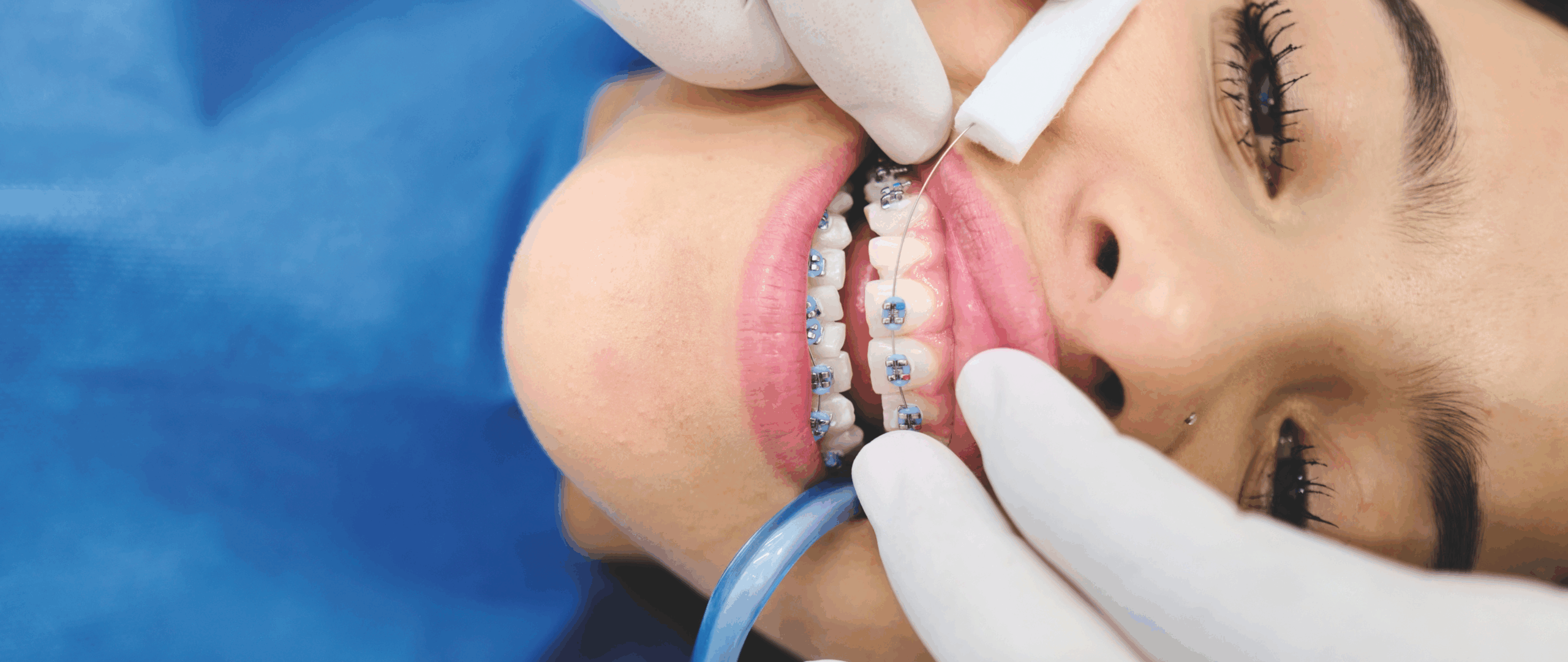
Benic et al. (2019) demonstrated that BLIS M18™ can reduce VSCs specifically in orthodontic populations (people wearing braces) — a population particularly prone to halitosis due to the additional surface area and biofilm sites that braces introduce.
For general adult halitosis, BLIS K12™ has the strongest direct VSC evidence. For halitosis in orthodontic populations, BLIS M18™ has specific clinical data.
Both strains are Streptococcus salivarius — a commensal species that is a normal, dominant member of the healthy oral microbiome. They were selected (not engineered) for their ability to produce specific antimicrobial peptides:
Because both are native oral commensals, they colonise the oral cavity rather than transit through it — which is why the dosing formats are typically lozenges, sachets, or chewables that allow contact time in the mouth, rather than acid-protected gut probiotic capsules.
Across the BLIS trial library, effective doses cluster around 1 billion CFU/day, with some studies running up to 5B CFU/day. The dosing format matters: clinical trials almost universally use lozenges or sachets that dissolve in the mouth, allowing the strain to colonise the oral surfaces. Capsules designed for gut delivery are not appropriate for oral probiotic claims.
Recommended daily dose for both BLIS K12™ and BLIS M18™ is ≥ 1 billion CFU/dose. Both strains are commercially available in lozenge, sachet, powder, and chewable formats, with stability data to support each format.
Most “oral probiotic” claims in market are built on weak strain provenance, gut-probiotic evidence repurposed for the mouth, or in-vitro data alone. The two strains with the deepest clinical record across the indications consumers actually care about — gum health, cavities, and bad breath — are Streptococcus salivarius K12 (BLIS K12™) and Streptococcus salivarius M18 (BLIS M18™).
When evaluating any oral probiotic strain, the test is: is the strain identified, is the dose commercially relevant, was the trial design appropriate, was the population relevant, and is the endpoint clinically meaningful?
BLIS M18™ and BLIS K12™ are commercialised in oral probiotic products across more than 40 markets globally. Both hold US GRAS status and are supported by full regulatory dossiers and market-specific claims libraries.
For more on formulation, claims libraries, or co-development, contact your BLIS Technologies Limited or Probi representative.
A representative selection of clinical evidence cited in this guide. A full bibliography with study summaries is available on request.
Kiselnikova, L. P., & Toma, E. I. (2022). Changes in the main dental parameters of preschoolers with caries affected by long-term probiotic intake. Pediatric Dentistry and Dental Prophylaxis, 22(2), 97–102. https://doi.org/10.33925/1683-3031-2022-22-2-97-102
Di Pierro, F., Zanvit, A., Nobili, P., Risso, P., & Fornaini, C. (2015). Cariogram outcome after 90 days of oral treatment with Streptococcus salivarius M18 in children at high risk for dental caries: results of a randomized, controlled study. Clinical, Cosmetic and Investigational Dentistry, 7, 107–113. https://doi.org/10.2147/CCIDE.S93066
Babina, K., Salikhova, D., Makeeva, I., Zaytsev, A., Sokhova, I., Musaeva, S., Polyakova, M., & Novozhilova, N. (2024). A three-month probiotic (the Streptococcus salivarius M18 strain) supplementation decreases gingival bleeding and plaque accumulation: A randomized clinical trial. Dentistry Journal, 12(7), 207. https://pubmed.ncbi.nlm.nih.gov/39057009/
Chen, W., Sharma, L., Shao, P., Griffith, T., Love, R., Jain, R., Hale, J., & Sharma, A. (2025). Adjunctive use of Streptococcus salivarius M18 probiotic in the treatment of periodontitis: a randomized controlled trial. 3 Biotech. https://pubmed.ncbi.nlm.nih.gov/40443548/
Burton, J. P., Drummond, B. K., Chilcott, C. N., Tagg, J. R., Thomson, W. M., Hale, J. D. F., & Wescombe, P. A. (2013). Influence of the probiotic Streptococcus salivarius strain M18 on indices of dental health in children: A randomized, double-blind, placebo-controlled trial. Journal of Medical Microbiology. https://doi.org/10.1099/jmm.0.056663-0
Salim, H. P., Mallikarjun, S. B., Raju, S., & Surendranath, A. R. (2023). Randomized clinical trial of oral probiotic Streptococcus salivarius M18 on salivary Streptococcus mutans in pre-primary children. International Journal of Clinical Pediatric Dentistry, 16(2), 259–263. https://doi.org/10.5005/jp-journals-10005-2527
Burton, J. P., Chilcott, C. N., Moore, C. J., Speiser, G., & Tagg, J. R. (2006). A preliminary study of the effect of probiotic Streptococcus salivarius K12 on oral malodour parameters. Journal of Applied Microbiology, 100(4), 754–764. https://doi.org/10.1111/j.1365-2672.2006.02837.x
Mei, L., Yan, F., Cheng, L., Na, A., Cannon, R. D., & Guan, G. (2026). Tongue brushing and oral probiotics for the treatment of halitosis: A randomized controlled trial. Journal of Breath Research. https://doi.org/10.1088/1752-7163/ae3edc
Jamali, Z., Aminabadi, N. A., Samiei, M., Deljavan, A. S., Shokravi, M., & Shirazi, S. (2016). Impact of chlorhexidine pretreatment followed by probiotic Streptococcus salivarius strain K12 on halitosis in children: A randomised controlled clinical trial. Oral Health and Preventive Dentistry, 14(4), 305–313. https://doi.org/10.3290/j.ohpd.a36521
Benic, G. Z., Farella, M., Morgan, X. C., Viswam, J., Heng, N. C., Cannon, R. D., & Mei, L. (2019). Oral probiotics reduce halitosis in patients wearing orthodontic braces: a randomized, triple-blind, placebo-controlled trial. Journal of Breath Research, 13(3), 36010. https://doi.org/10.1088/1752-7163/AB1C81
BLIS®, BLIS K12™ and BLIS M18™ are registered trademarks of BLIS Technologies Limited.
Because local laws and regulations related to the distribution, marketing and sale of ingredients and finished products vary, BLIS Technologies Limited disclaims any regulatory compliance, warranties, product guidance or instruction of any kind. This document is provided for business-to-business communication and educational purposes only without warranties of any kind. Users should seek legal and/or regulatory advice prior to the market introduction of any BLIS strain and before use of any claims, to ensure compliance and thereafter on an ongoing basis when required.