The evidence base behind Streptococcus salivarius BLIS M18™. and BLIS K12™ has grown significantly in the first half of 2026. Four new peer-reviewed publications — spanning a clinical trial, an animal study, and two mechanistic lab investigations — add meaningful depth to what we understand about how these strains work, where they work, and for whom.
This post walks through each study, what it found, and what it means in practice.

What is the oral microbiome, and why does it matter for strain science?
Before diving into the new data, it’s worth grounding the context. The mouth is not a single environment — it’s a collection of distinct ecological niches. The pharynx, the gingival crevice, the tooth surface, and the mucosal lining each host different microbial communities, under different conditions, with different implications for health.
This matters because not all oral probiotics behave the same way. Streptococcus salivarius K12 colonises primarily the pharyngeal and nasopharyngeal mucosa. Streptococcus salivarius M18 colonises the periodontal niche — tooth enamel and gingival tissue. Understanding which strain goes where is central to understanding what each one does. The 2026 research sharpens that picture considerably.
Study 1: BLIS M18™ in radiation-induced oral mucositis — the first clinical data
Huang et al. (2026) | Frontiers in Immunology | DOI: 10.3389/fimmu.2026.1745549
Standard periodontal therapies — scaling, root planing, antiseptics, and antibiotics — can be effective in the Oral mucositis — painful inflammation and ulceration of the mouth lining — affects an estimated 30–60% of patients undergoing head and neck radiotherapy. Until now, the clinical evidence for oral probiotics in this indication centred on BLIS K12™, including a 2024 randomised controlled trial (Peng et al., n=160) demonstrating reduced incidence, duration, and severity of mucositis in head and neck cancer patients.
Huang et al. (2026) is the first clinical study to evaluate BLIS M18™ in this context, and the first direct comparison of both strains in the same patient population. In a prospective interventional study of 69 nasopharyngeal carcinoma patients receiving chemoradiotherapy (n=23 per group), patients taking BLIS M18™ experienced:
- A significantly delayed onset of oral mucositis (p=0.014)
- Shorter total mucositis duration (median 47 vs 93 days; p=0.031)
- Shorter duration of severe mucositis (p=0.019)
BLIS K12™ did not show statistically significant differences from the no-probiotic group on these measures.
The authors suggest this difference reflects the strains’ distinct colonisation sites. BLIS M18™’s periodontal tropism places it precisely where plaque burden, local acidity, and inflammatory activation converge — factors now understood to be central to mucositis pathogenesis. BLIS K12™’s primary site of action (the pharyngeal mucosa) may be more relevant to upper respiratory and pharyngeal outcomes than to intraoral mucosal injury.
What this opens up: When read alongside the existing BLIS K12™ OM data, these findings point to a complementary dual-strain picture. The two strains appear to act on different tissues, through different mechanisms, in the same disease process — making a combined approach a scientifically grounded formulation hypothesis worth exploring.
This is an exploratory prospective study, not a randomised controlled trial. The findings are hypothesis-generating and the authors call for confirmatory RCT data.
Study 2: BLIS K12™ and the oral resistome
Udawatte et al. (2026) | Mechanistic lab study
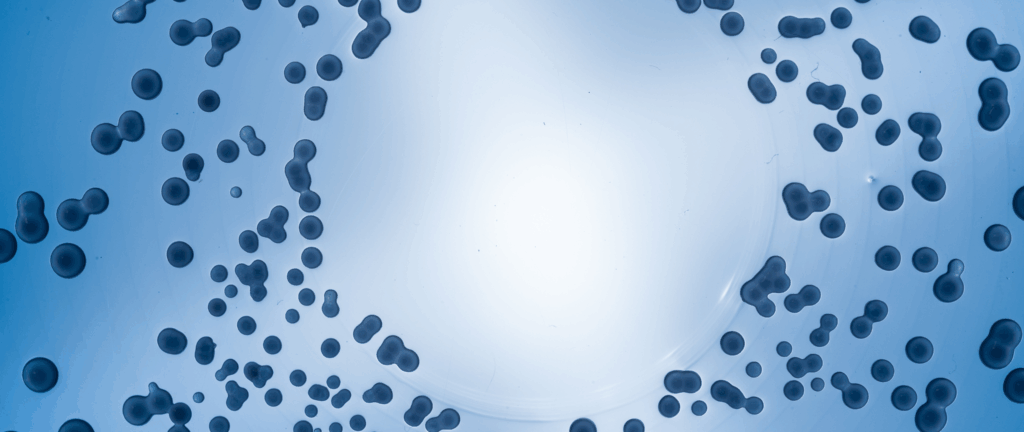
Antibiotic resistance is one of the defining challenges in global health, and the oral cavity is an underappreciated reservoir for resistance genes. This is the first study to examine how BLIS K12™ affects the active antibiotic resistance genes in oral bacteria — not just which genes are present, but which ones are switched on and being used.
Using a 3D polymicrobial saliva-derived biofilm model, researchers found that during the window of BLIS K12™ colonisation (approximately days 4–7), active resistance gene transcription fell to around one-sixth of baseline. Transcripts associated with resistance to penicillins and fluoroquinolones declined by approximately 44%. Crucially, BLIS K12™ showed no evidence of contributing to horizontal gene transfer of resistance between bacteria — a key safety data point.
The effect appeared to be driven by a shift in which bacteria were dominant, rather than any direct genetic mechanism, and was reversible once BLIS K12™ levels declined.
This is an in vitro model. The findings do not establish clinical benefit in humans, and the resistance-reducing effect was short-lived. Appropriate framing: BLIS K12™ has been shown in laboratory models to temporarily reduce active antibiotic resistance gene expression in oral biofilms.
Study 3: BLIS M18™ raises oral biofilm pH under low-sugar conditions
Reichardt et al. (2026) | Mechanistic lab study
Dental caries develops when acid-producing bacteria lower the pH of the biofilm surrounding teeth below a critical threshold, dissolving enamel over time. This study looked at whether S. salivarius K12 and M18 could shift that acid balance in a saliva-derived biofilm model under both low- and high-sugar conditions.
Under low-sugar conditions, BLIS M18™ significantly raised biofilm pH compared to control — consistent with its urease activity, which generates ammonia and helps buffer local acidity. BLIS K12™ showed no significant pH effect and appeared not to colonise the model well. Of note, the comparator strain Lactobacillus reuteri had the opposite effect, lowering pH — raising questions for formulators currently considering that strain for dental health applications.
This adds mechanistic, ecology-level support to BLIS M18™’s existing clinical data in dental caries and gingivitis, and helps explain how the strain may support a less cavity-prone oral environment.
In vitro model; effects were small and condition-dependent. Clinical confirmation is needed. Language to use: “supports a less acidic oral environment” or “shown in laboratory models to help buffer oral biofilm pH.”
Study 4: BLIS K12™ after respiratory infection — immune modulation, not direct killing
Su et al. (2026) | Animal study
Building on earlier work showing that BLIS K12™ protects mice from lung injury when given before infection with Mycoplasma pneumoniae, this study tested whether it works therapeutically — given after infection is established.
After 14 days of treatment, BLIS K12™ did not reduce bacterial load or reverse tissue damage. However, it did produce significant reductions in airway inflammation (lower TNF-α and IL-6), raised mucosal sIgA, and shifted the lung microbiome back toward a healthy composition. The authors conclude that K12’s benefit in a therapeutic context is immune-modulatory and microbiome-mediated, rather than directly antibacterial.
This is a useful distinction for anyone building respiratory wellness claims around BLIS K12™. The strain’s strongest evidence remains in prevention and immune support — not as a treatment once infection has taken hold.
Mouse model; single time point; findings are hypothesis-generating. Prevention framing retains stronger clinical support than therapeutic framing.
The bigger picture: strain-specific science in a maturing category
Across these four studies, a consistent theme emerges: the mechanisms that matter in oral probiotic science are increasingly granular. Which niche a strain colonises, how it interacts with the broader microbial community, what enzymatic activity it contributes, and how the host immune system responds — these details now have clinical and commercial implications.
For product developers, the question is no longer simply “does this oral probiotic work?” but “which strain, for which indication, acting through which mechanism?” The 2026 evidence base for BLIS K12™ and BLIS M18™ makes that level of specificity more achievable than it has ever been.
References
Huang X-T, Feng H, Tan Y, Wang Q, Wei J-M, Huang Z-D, Wang X-T and Lu H-J (2026) Effectiveness of Streptococcus salivarius probiotics on alleviating radiation-induced oral mucositis via inflammatory and microecological modulation: a prospective pragmatic interventional study in nasopharyngeal carcinoma. Front. Immunol. 17:1745549. https://doi.org/10.3389/fimmu.2026.1745549
Udawatte DJ et al. (2026) Transient restructuring of the active oral resistome during probiotic Streptococcus salivarius K12 colonization in a 3D polymicrobial biofilm model. [Journal pending verification — confirm before publishing]
Reichardt N et al. (2026) The effect of probiotic bacteria on community composition, microscale pH and matrix architecture in a saliva-derived model of oral biofilm. [Journal pending verification — confirm before publishing]
Su Y et al. (2026) Attenuated efficacy of Streptococcus salivarius K12 against Mycoplasma pneumoniae infection in mice. [Journal pending verification — confirm before publishing]
Peng X, Li Z, Pei Y, Zheng S, Liu J, Wang J, Li R and Xu X (2024) Streptococcus salivarius K12 alleviates oral mucositis in patients undergoing radiotherapy for malignant head and neck tumors: A randomized controlled trial. Journal of Clinical Oncology. https://doi.org/10.1200/JCO.23.00837
BLIS Technologies Limited is a New Zealand-based biotechnology company and the developer of BLIS K12™ and BLIS M18™ (Streptococcus salivarius K12 and M18). This post is intended for B2B and educational purposes. All claims should be reviewed against applicable regulatory requirements in your market before use.